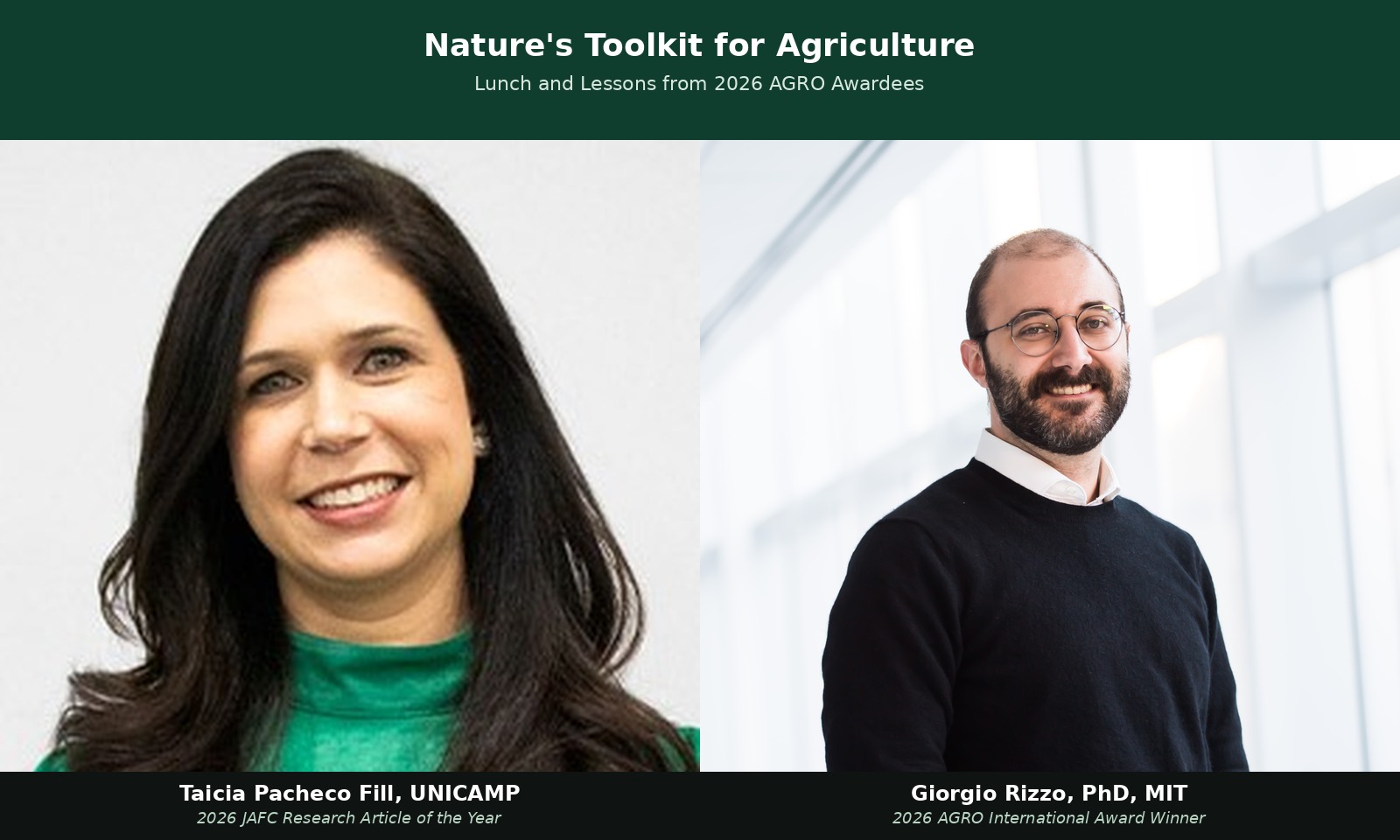
Webinar RECORDING Originally aired: 23 September 2026 Presenter: Dr. Michael Appell, 2026 Kenneth A. Spencer…
Agriculture in Colonial New England
UPCOMING Webinar
A Joint AGRO and History of Chemistry Division Webinar Commemorating the American Chemical Society’s 150th Anniversary
CLICK HERE TO REGISTER NOW!
When: 12 PM EST USA, 18 November 2026
Presenters:
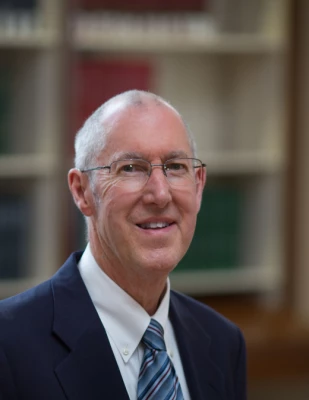
Gary D. Patterson, Professor Emeritus of Chemistry, Carnegie Mellon University; Historian, American Chemical Society Division of the History of Chemistry
Moderator: Solito Sumulong, Principal, Concerted Innovations LLC
Description:
Emigrants from England came to New England for many reasons, and some chose to found new towns and live communally. A central part of that venture was establishing perpetual agriculture to feed the people. They found abundant land and water and native plants that could be grown successfully, but also serious obstacles. Land ownership was contested, many British crops were only marginally hardy, and familiar English implements and practices were missing or hard to obtain. The early years went to survival, so large-scale farming had to wait for more settlers to arrive and for heavy industries to be financed and built. This joint webinar of the ACS Division of Agrochemicals (AGRO) and the ACS Division of the History of Chemistry (HIST) commemorates the American Chemical Society’s 150th anniversary. In it, Professor Patterson, a historian of chemistry, invites us to celebrate how the agricultural foundation of colonial New England came to be.
What you will learn:
This webinar examines how agriculture became established in colonial New England, including:
- How the battle for ownership of land shaped early settlement
- How settlers developed successful crops, drawing on native plants and adapting English ones
- How agricultural implements were obtained and manufactured
- How economic agriculture was organized, including recruiting a workforce, financing, and distribution
Presenter Bio:
Gary D. Patterson is Professor of Chemistry Emeritus at Carnegie Mellon University in Pittsburgh, Pennsylvania. He received his Ph.D. in Physical Chemistry from Stanford University in 1972. During his academic career he published more than 100 articles on the chemical physics of amorphous systems, especially polymers. He is a Fellow of the American Physical Society and the Royal Society of Chemistry. He taught theoretical chemistry to students of chemistry and chemical engineering, especially thermodynamics and transport, and is the author of Physical Chemistry of Macromolecules (2007).
Patterson is the Historian of the Division of the History of Chemistry of the American Chemical Society. He has published three previous books with Springer: A Prehistory of Polymer Science (2012), Polymer Science from 1935-1953: Consolidating the Paradigm (2014), and Chemistry in 17th Century New England (2020). He is also the author of Paul John Flory: A Life of Science and Friends (2016). He has edited three books based on History of Chemistry Division symposia: Characters in Chemistry: A Celebration of the Humanity of Chemistry (2013), Preceptors in Chemistry (2018), and Modern Applications of Flory’s “Statistical Mechanics of Chain Molecules” (2020). Patterson has also been associated with the Science History Institute as the Charles Price Fellow (2004), Chief Bibliophile of the Bolton Society, Chair of the Heritage Council, and a member of its Board of Directors. Gary is also a proud member of the AGRO Division.
The ACS Division of Agrochemicals (AGRO) is committed to bringing the agricultural science community a regular series of Lunch and Learn webinars. For past recordings, visit the Lunch and Learn Webinar Archive. The AGRO Division Lunch and Learn webinar series is graciously sponsored by JRF Global. This webinar is co-presented by the ACS Division of the History of Chemistry.
Related Posts